October Automation · Harvest Robotics
Hand-bucking quality for dried cannabis harvests.
The Ai Bucker finds every cut point with machine vision and takes the bud off the branch itself — an operator loads, the machine does the rest.
01 · Cut vs pull
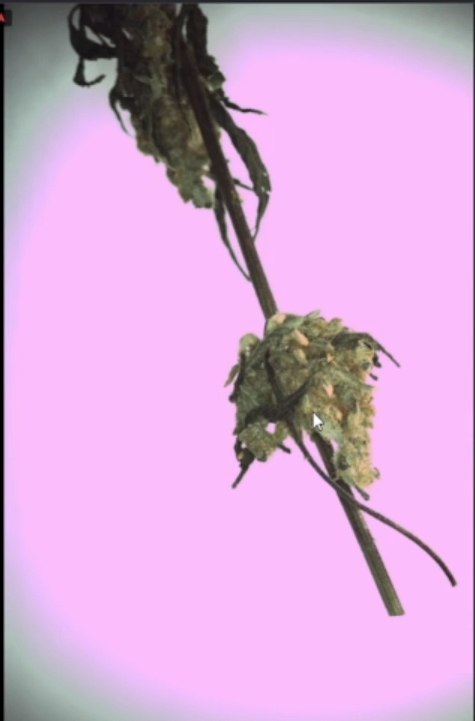
Conventional buckers work by force: rollers grip the stem and drag it through a die, and every bud "pops" off — which is to say, it tears. The Ai Bucker takes each bud off the way your best trimmer would: it finds the spot and makes one deliberate cut.
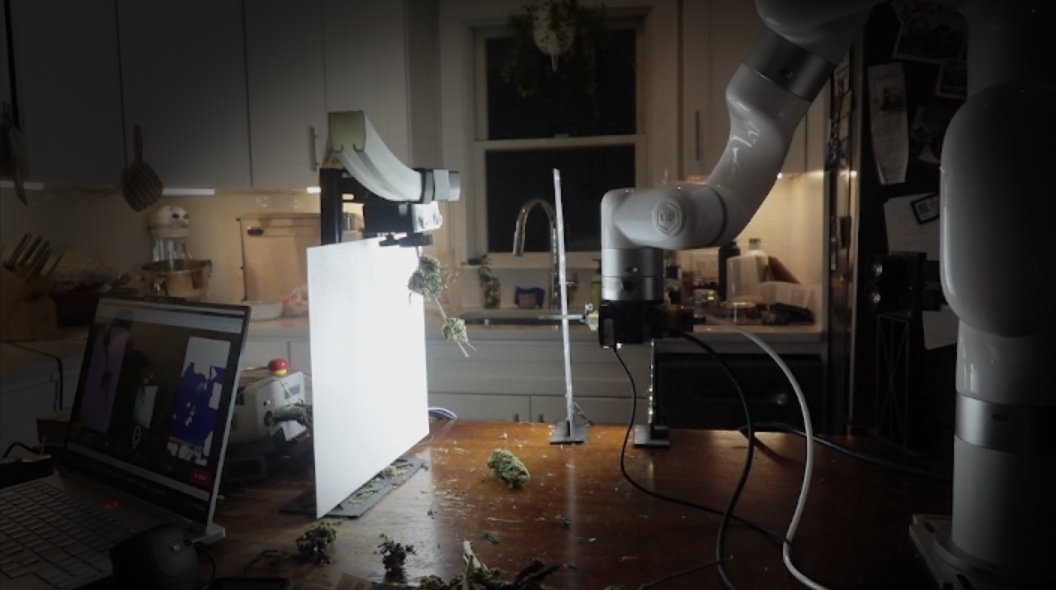
Seventeen seconds of our own bench footage, from one continuous run. First the end-effector camera, close enough to watch the vision system settle on a bucking point. Then the workspace camera for both cuts — bud one off the branch, the arm retracting and swinging clear, then bud two. Three excerpts from a single take, played at real speed; nothing sped up, nothing staged.
Vision finds the bucking point; pneumatic shears sever the stem above the bud. The flower never takes the load.
Nine seconds from the manufacturer's own demonstration — "Dry Bucking CBD Hemp Flower" by theTriminator, played from 0:26. Watch what happens to the flower at the plate, and where it lands. We didn't shoot this and we didn't cut it: it is their machine, their material, their camera. Watch in full on YouTube ↗
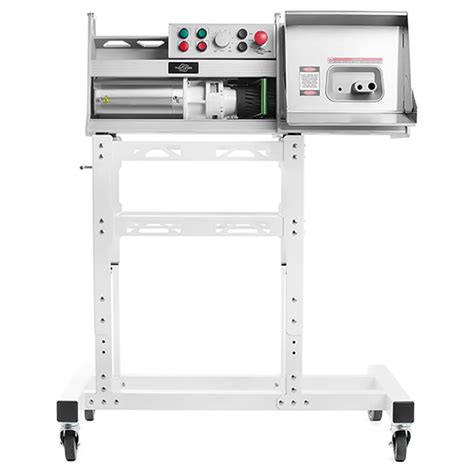
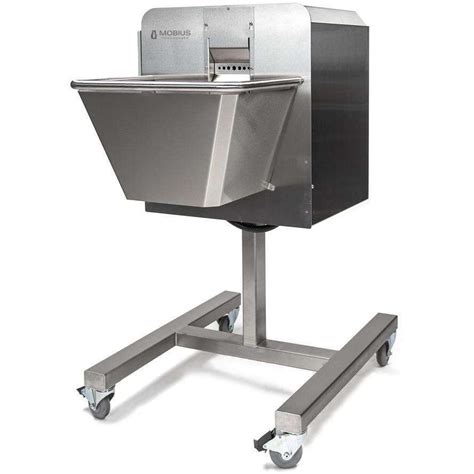
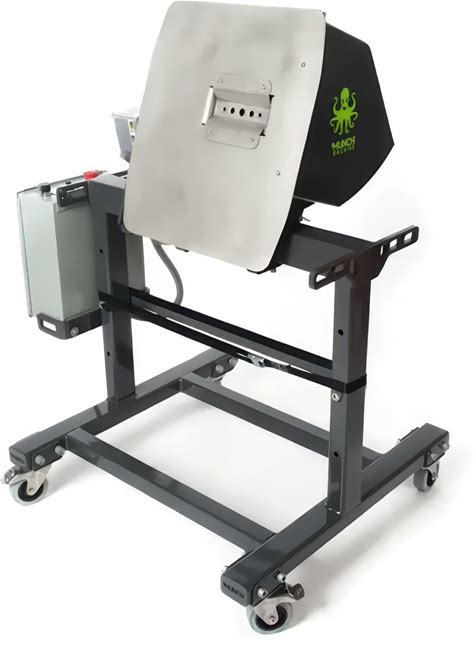
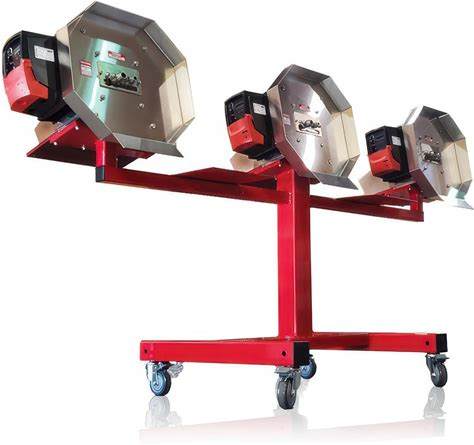
The stem is pulled through a keyhole die; the bud stops against the plate and rips free at its weakest point — the bud itself.
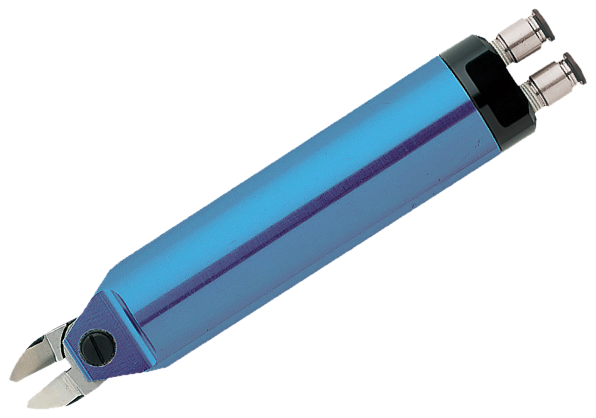
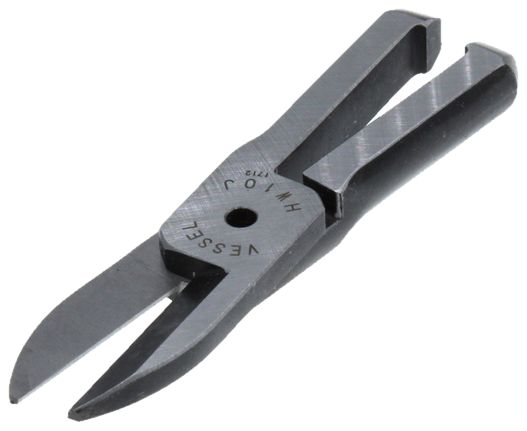
PRODUCT PHOTOS SHOWN FOR IDENTIFICATION · © THEIR RESPECTIVE MANUFACTURERS
| Ai Bucker — vision cut | Pull-through bucking | |
|---|---|---|
| Mechanism | ML-targeted pneumatic shear cut | Stem dragged through a steel die by rollers |
| The bud's base | Clean cut face above the bud | Torn crown at the weakest point |
| Trichomes | No contact along a pull path | Scrubbed against the die on the way out |
| Selectivity | Per-bud — the model chooses every cut | Everything on the stem pops, wanted or not |
| Dry material | Same gentle cut | Prone to shatter and fragment |
| Raw speed | One deliberate cut at a time — scale by adding cells | Fast — and every pound pays the grade tax |
| After bucking | Whole, intact flower to the trimmer | Re-grade, de-stem and cleanup passes |
Comparison describes the pull-through mechanism common to conventional bucking machines; verify specifics with each manufacturer.
02 · Why the Ai Bucker
Bucking sits between every harvest and every sale — and it is the slowest, most labor-hungry step in the room. Crews are hard to find for a job this repetitive, training is constant, and every hour spent pulling buds off stems is an hour not spent trimming, grading, or packing.
The Ai Bucker lets you process your harvest without adding to your team. It makes throughput predictable, takes the repetitive strain off your crew, and frees your experienced people for the work that actually needs their judgment.
Drop a branch butt-first into the carrier — the jaws latch by themselves. That is the operator's entire job.
No fixtures, no fixed spacing. The detection model locates each bud and its bucking point on the branch as it actually grew — and re-checks after every cut.
A servo fine-approach presents each cut to pneumatic shears. The bud comes off the stem the way your best bucker would do it — one clean cut at a time.
A compact cell on a standard outlet and a small compressor — no plant air to run, no production line to re-plumb, no construction project.
Every cut is logged — counts, timing, throughput per session. You get the numbers to plan labor and forecast the room, not a black box.
A built-in annotation and retraining loop tunes the detector on the strains you actually grow — the cell gets better every harvest.
03 · See it work
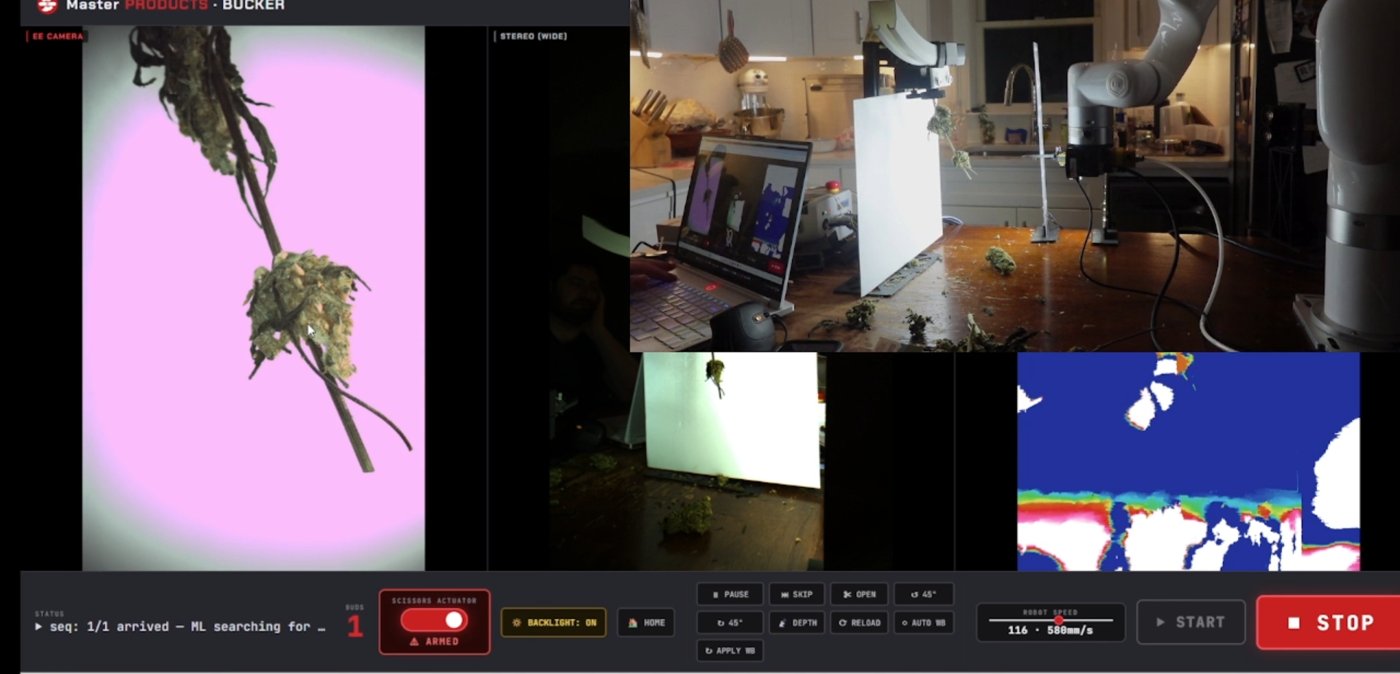
This is our development cell on the bench — August 8, 2026, branch B1. One take, no edits, no speed-ups: the machine scans the branch, servo-locks the bucking point, opens the gripper, fires the shears, and swings to the next cut. The interface you see is the same software that ships with the cell.
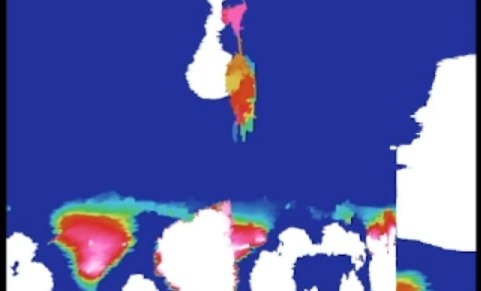
Four live views in frame: end-effector camera (left), workspace camera (top right), backlit wide view and real-time stereo depth (bottom). Development hardware shown; footage is unedited.
04 · Technology
A backlit end-effector camera watches every bud up close. The detection model scores each candidate, picks the cut point, and holds lock while the arm closes in — even as the branch moves.
EE CAMERA · LIVE
STEREO DEPTH · LIVEA Basler stereo rig builds a real-time depth map of the branch and everything around it. Cluster and cut-point decisions are depth-aware, so the arm knows not just where a bud is in the image, but how far and what's behind it.
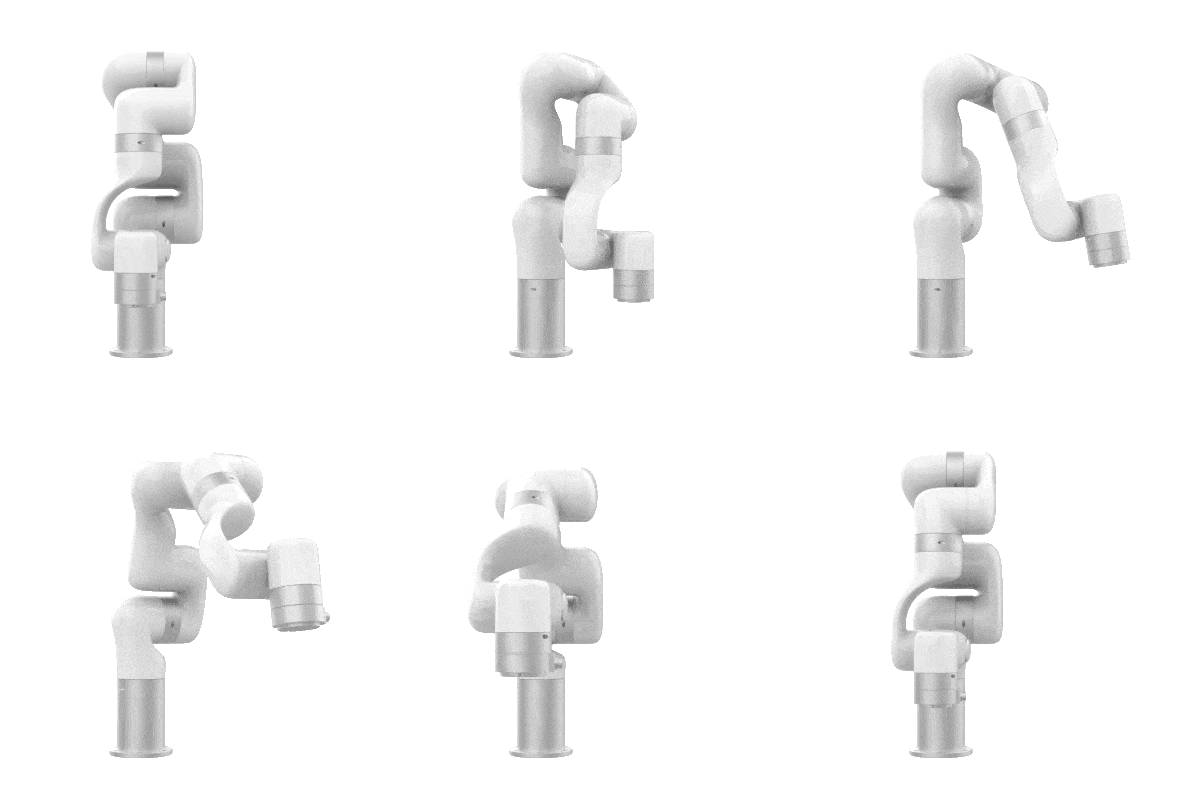
A UFACTORY xArm collaborative arm carries a VESSEL pneumatic nipper on a servo fine-approach. The gripper presents the bud, the shears fire once, and the bud drops — a cut, not a tear.
WORKSPACE CAMERAThe cutter
The blade that touches your flower is a VESSEL pneumatic nipper, the same class of tool that trims resin and lead wire on electronics lines all day, every day. It fires from shop air on a signal from the vision system, so every cut lands with the same force and the same closing speed — the thousandth bud of a shift is cut exactly like the first.
Shop air does the work, not a motor and a gearbox. The stroke is short, fast and repeatable, and the tool is built to be cycled continuously on a production line.
VESSEL sells blades separately from the body, so a dull blade is a two-minute swap rather than a service call — and a spare set lives in the cell.
The stock blade profiles are made for resin and wire. We run the blade geometry that severs a green stem cleanly without crushing it or dragging the cut through the bud.
Reference: VESSEL air nipper catalogue (PDF) · VESSEL is the tool manufacturer, not an affiliate of October Automation
Branches drop into a funnel-loaded carrier that latches on its own and shuttles the branch through the station. When the last bud is off, the bare stem is ejected automatically and the carrier comes back for the next one.
The cell serves its own interface over your local network — any laptop, tablet, or wall screen is a control station. No installs, no license server, no cloud dependency to run your room.
LIVE INTERFACE · AS SHIPPEDFrom the builders of the Ai Conveyor. October Automation makes vision-guided harvest machines that run on real production floors — AI sorting and quality control in commercial facilities today. The Ai Bucker is the next machine in the line.
octoberautomation.com05 · Configurations
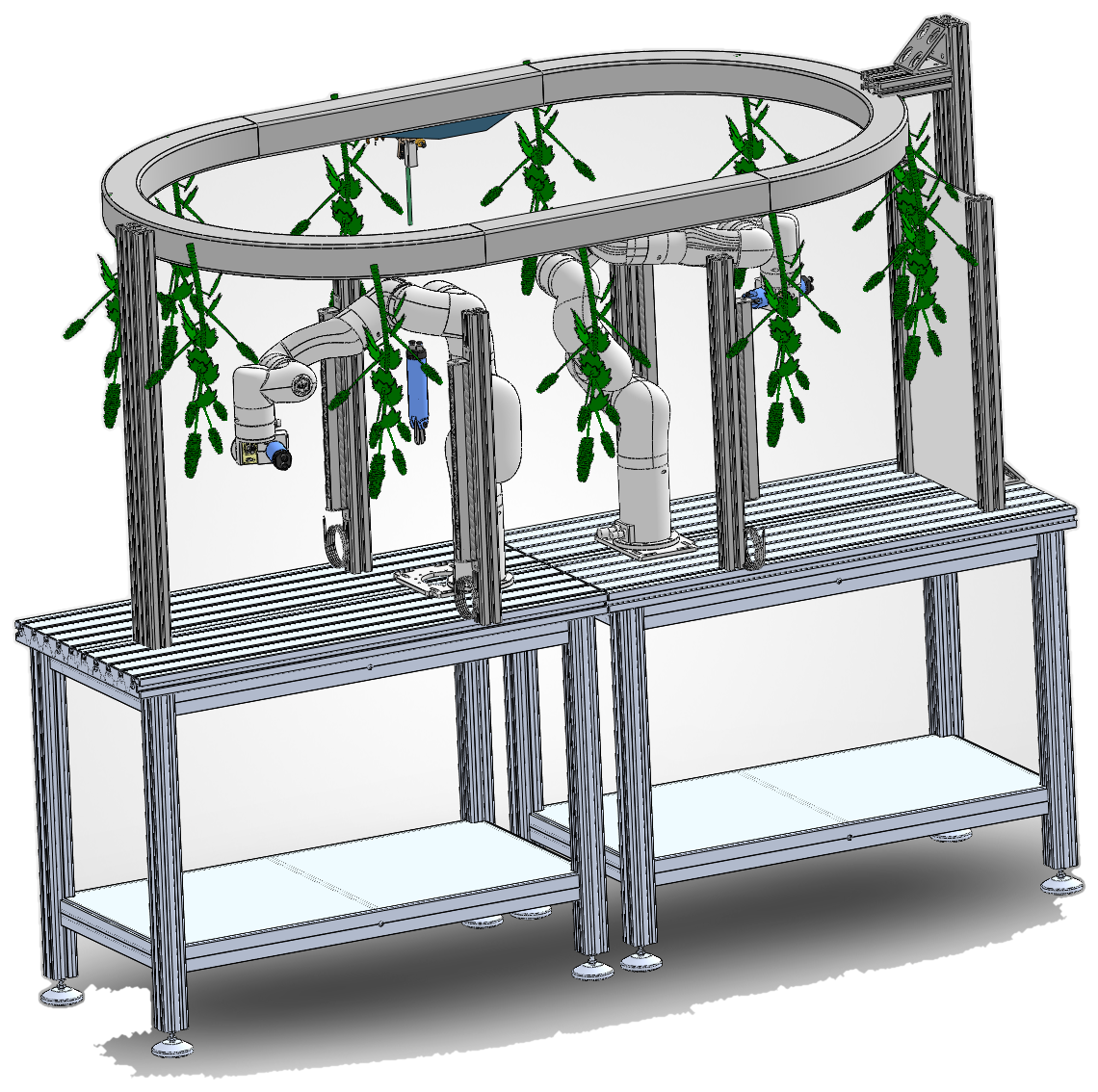
Every system is built around the same loop: branches hang from an overhead carrier track, and robot stations work them as they pass. Add arms to cut faster; extend the track to feed the cell straight from your dry room.
TWO-STATION CELL · OVERHEAD CARRIER LOOP · ENGINEERING CAD
The smallest system we sell, and the one shown above. One loader keeps the loop fed; two arms work every branch that comes around.
The same loop and the same footprint class, with four arms working it instead of two — more cuts per lap without adding floor space or a second loader.
Extend the overhead track out of the cell and into your dry room. Branches are hung once, at harvest, and ride the line to the arms — nobody carries totes.
Tier 03 · the whole line
Branches go onto the ceiling conveyor the moment they're cut and hang from it until they're bare stems. The same hooks carry them out of the harvest room, coil back and forth across the dry-room ceiling, and deliver them dry straight into the cell. Hang a branch once; the line does the rest.
Plan view
Three rooms, one continuous track. Branches are cut and hung in the harvest room, coil through the dry room on the ceiling, and arrive at the bucking cell dry — the operator never carries a tote between rooms.
Drag or use the arrows to travel the line · hover any machine to make its schedule row blink, or hover a row to find the machine.
One continuous line · whole plants → cut down & hung → dry-room coil → bucking cell → conveyor portal → tumble trim → Ai Sorter → three graded streams
Whole potted plants stage in the harvest room and are cut down at S1 — every branch on the coil came off one. The dry room fills as they hang: green at the entry, creeping toward the cell as they dry. Once the coil is full it runs first in, first out — the oldest, driest branch is always the next one bucked.
Downstream · room 04
Bucked buds leave the cell on a flat conveyor and never get carried again. The line feeds two tumble trimmers, merges their output, and runs it under the October Ai Sorter — which splits every bud into three streams: packaging, remediation and waste.
Layouts are engineered per facility · tell us your room and harvest volume
06 · The business case
We'll say the awkward part first: one robot arm bucks about 1.5 lb of dry flower an hour. A good human bucker does 2.5 lb. Per hour, a person wins — and that is not the comparison that decides anything. A person works a shift. The cell works the clock.
Faster than a single arm — for the eight hours they're on the floor, and only if you can hire and keep them through the season.
Slower per hour, identical at hour nineteen. No breaks, no shift change, no training curve, no turnover mid-harvest.
Four arms at 1.5 lb/hr, running 20 hours. That is six bucker-days of work coming off the line every day.
Every figure above is computed from the boxes on the left — we assert none of them. 1.5 lb/hr per arm is our own planning estimate, not a measured result; the Fall 2026 pilot exists to replace it with a number from your floor. Labour displaced is not the same as labour eliminated — someone still loads the line.
The honest summary: a cell doesn't out-run your crew — it out-lasts them, and it shows up every day of the harvest.
07 · Questions
Straight answers, including where the honest answer is still "the pilot will tell us." Anything marked in amber is a number we won't publish until we've measured it on a real harvest.
Dried branches, as they come off the line — the machine is built for the dry-buck step, not for wet bucking straight out of the field.
Branches hang from the carrier the same way they hang to dry, so the material never has to be re-oriented or laid down before it reaches the arm.
The detector is trained, not hard-coded to one plant shape — it scores each bud and finds the bucking point on the branch as it actually grew.
A built-in annotation tool captures frames from your harvest and retrains it, so an unusual structure or a very leafy cultivar becomes something the cell has seen. Retraining is part of what a pilot is for.
We aren't publishing a throughput number until we've measured one on a customer's floor over full shifts. Anyone quoting you a clean pounds-per-hour figure for robotic bucking should be asked how they measured it.
What we can tell you today: the arm works a branch bottom-up, re-scans after every cut, and travels at up to 800 mm/s between targets. Rate per cell on real material: pilot data.
It doesn't hunt forever. If a scan turns up no candidate the sequence bails within about a second, rotates the branch to get a different look, and re-scans.
If the branch is genuinely finished — or genuinely unreadable — it moves on rather than stalling the loop. STOP is always one tap away on the operator screen.
A standard outlet, a small compressor for the shears, floor space for the cell, and a spot on your network for the browser interface. No plant air, no three-phase, no drains, no construction.
Exact footprint and power draw: spec pending final build — on the spec sheet as soon as the production frame is fixed.
One person, loading. Operator mode is deliberately two buttons — START and STOP, plus HOME and the backlight — and every engineering control is hidden behind a separate view.
If someone on your crew can hang a branch on a line, they can run the cell.
No. The cell serves its own interface over your local network — any laptop, tablet or wall screen with a browser is a control station.
No installs, no license server, no cloud dependency to run your room. Connectivity is for support and updates, not for operation.
Pull-through buckers separate bud from stem by dragging the branch through a plate — the flower is what fails, and it fails against steel.
The Ai Bucker severs the stem above the bud with a pneumatic nipper, so the bud is never the thing taking the load. That's the whole design argument, and it's why we show the mechanism side by side rather than just claiming it.
Off-the-shelf industrial parts, on purpose: a UFACTORY xArm collaborative arm, a VESSEL pneumatic air nipper with replaceable blades, and Basler machine-vision cameras.
Nothing exotic to source when a wear part needs replacing. Blades are a two-minute swap and a spare set lives in the cell. Support terms and warranty: terms in the pilot agreement.
Yes — that's why the loop exists. The minimum system is a two-station cell; the same loop takes four arms for more cuts per lap in the same footprint class.
Beyond that, the overhead track extends out of the cell and into your dry room, so branches are hung once at harvest and ride the line to the arms.
Pilots are priced as a service for the harvest window, not as a capital purchase, and the pilot fee credits toward a system if you convert.
System pricing depends on station count and how much track your room needs: quoted per facility. Tell us your room and volume and we'll put real numbers against it.
Reserve a Fall 2026 pilot slot. Slots are scheduled around harvest windows and go in order of reservation — we confirm availability within two business days.
Our technicians run the cell on your material for the window, and every number we measure is yours to keep.
Still unanswered? Email jon@octoberautomation.com — it reaches the engineers, not a sales desk
08 · Fall 2026 · Limited slots
Before we sell you a machine, we prove it on your material. A pilot puts the Ai Bucker in your facility for your harvest window — run by our technicians, priced as a service, with no capital purchase.
Slots are scheduled around harvest windows and go in order of reservation. Tell us your timing and volumes and we'll confirm availability within two business days.
Reserve nowNo commitment — reserving a slot starts a conversation, not a contract.